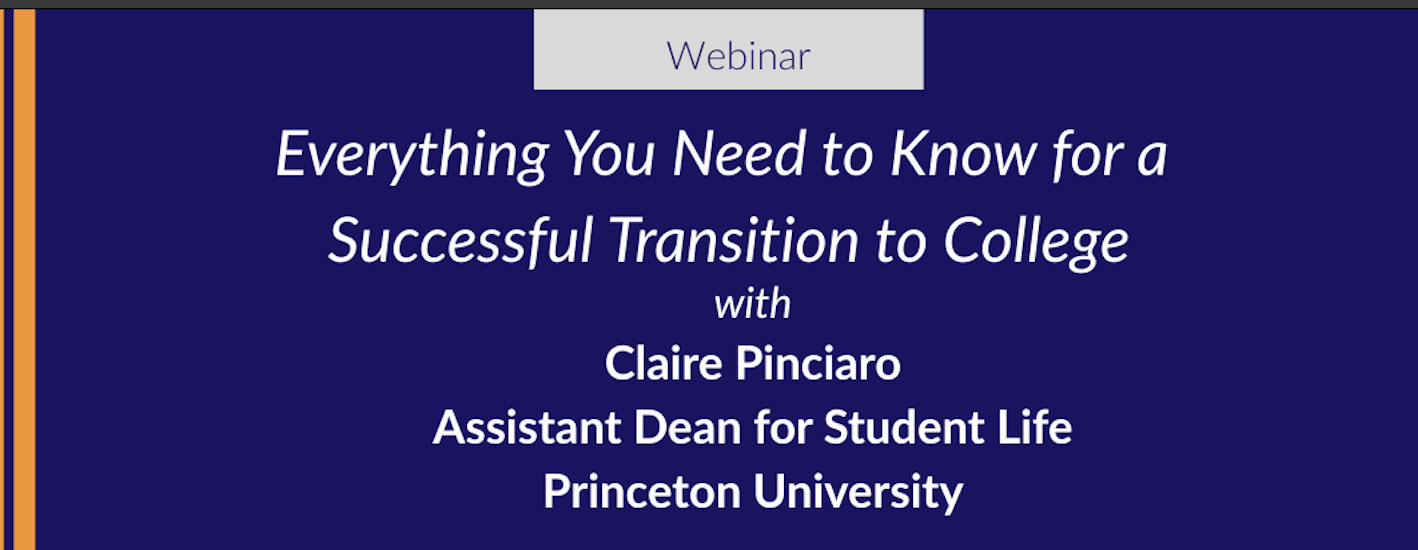
Expert Admissions hosted a webinar with Claire Pinciaro, Assistant Dean for Student Life at Princeton. We discussed academic adjustment, social transition and building community, health routines and emotional wellbeing, the changing student-parent relationship, and more.
Understanding the Transition to College
The transition to college is a period of growth for both students and families. Students will experience greater freedom, new responsibilities, occasional setbacks, and many opportunities to build resilience. They enter a new community in which their independence and curiosity are stretched, and they must learn to manage many aspects of their lives on their own. The most effective preparation combines practical skills, healthy routines, open communication, and a willingness to ask for help.
Academic Adjustment
College academics typically include fewer hours in class, but students are expected to complete considerably more work independently. Students must take greater responsibility for time management, consistent academic habits, and monitoring their own progress
Part of this new independence for students involves learning to ask for help and use the full range of resources available to them. From attending faculty office hours to visiting the writing center, students can benefit tremendously from asking thoughtful questions, requesting clarification, and proactively seeking advice.
Support can also come from peers. Many colleges have peer advisors and other student leaders who can offer guidance based on their own experiences. Study groups can deepen students’ understanding of course material, while also helping them form meaningful relationships and feel more connected to their academic community.
Of course, being in an academic community can also invite comparison and competition—but students can defuse this tension by focusing on their own sense of purpose. Academic advisors and family can help students clarify what interests them and why to help them make more intentional decisions. When students understand the deeper reasons behind their academic choices, they are often better able to engage with their work, collaborate with others, and define success on their own terms.
Using AI Responsibly
Though AI is becoming an increasingly important part of academic life, expectations for its use vary widely, and students must be especially careful about using it. Just as professors may have different policies regarding collaboration, they may permit certain forms of AI assistance or prohibit it entirely. Students are responsible for reading and following the policies outlined in each syllabus.
Students With Learning Differences
Students who received accommodations in high school may encounter a significant change in college. In most cases, students are responsible for managing the accommodations process themselves. Families should review the college’s procedures in advance, gather required documentation, and encourage the student to communicate directly with the disability services office early and often.
Social Transition and Building Community
The social adjustment to college often takes longer than students expect. It is common for students to worry that everyone else has already found a friend group, even though many of their classmates are experiencing the same uncertainty.
Families can help by normalizing this process and encouraging students to take small social risks. Eating with hallmates, starting a conversation before class, attending campus events, or inviting another student to join an activity all create opportunities for connection. Students can also find community through religious and cultural groups, LGBTQ+ centers, international student programs, and the wealth of student clubs and organizations.
Living with other people also requires patience and communication. Roommates and hallmates may have different routines, expectations, and habits. Conflict is a normal part of communal living, and students need to learn how to address concerns directly and respectfully. Important conversations are usually better handled face to face than through text messages, where tone can easily be misunderstood. Using “I” statements can help students express concerns without escalating tension.
Emotional Wellbeing and Healthy Routines
Emotional wellbeing has become an increasingly prominent topic on college campuses, and for good reason.
Because college offers so many opportunities, students may overcommit. Keeping a calendar can help students visualize not only their academic and social obligations but also the time they need for sleep, meals, and personal care.
What works for a student in high school (or doesn’t) is a great clue to what will be helpful in college. Before college begins, families can help students reflect on what currently helps them manage stress and identify realistic strategies for maintaining their wellbeing. Health services, counseling centers, and wellness offices can provide additional support as needed.
The Changing Parent-Student Relationship
College is an important time for students to develop self-reliance, so parents should offer guidance without stepping in to solve problems on their behalf. Rather than contacting a professor or handling a difficult situation themselves, parents can help students identify the appropriate person to contact, clarify what they want to say, prepare useful questions, and think through how to advocate for themselves.
This kind of independence should be practiced before college whenever possible. Students benefit from learning how to make important phone calls, manage a bank account, do laundry, and handle other responsibilities. Practicing these skills while still at home can make the transition less overwhelming.
Parents and students should also discuss expectations about when, and how much, they will communicate before college begins—while staying flexible. A scheduled phone call every day may seem reasonable during the summer but become unrealistic once classes and activities start. The goal is to maintain connection while allowing the student’s independence to grow.
By supporting students without taking over, encouraging self-advocacy, and recognizing that adjustment takes time, parents can help students develop skills that will serve them not only in college but throughout their adult lives.
For all the details on these topics and more, watch the webinar above.
Leave a Reply